INSPIRATIONS
‘Obsessive Compulsive Order’ is about how I understand creativity working in music, visuals, and beyond.
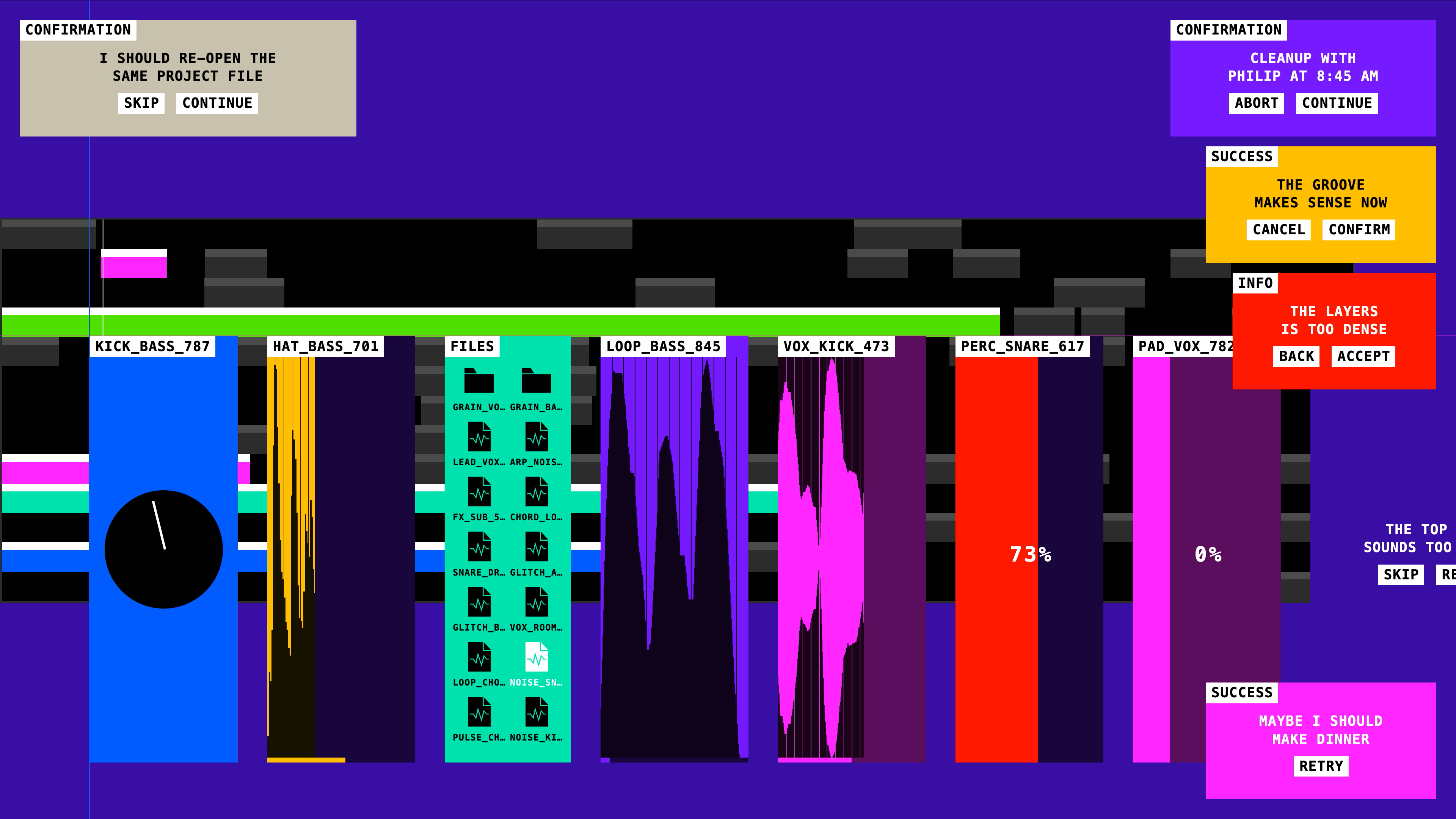
The idea started when Max shared the Ableton project for the track. The composition looked very organized, but also scattered, like an abstract painting – dense, detailed, and complex. I imagined him building it, and I decided to visualize that process step by step, from the first ideas for the samples, through testing and combining them, building the structure, refining it, and finally exporting the track. The title plays with order and disorder. For me, creating is about trying paths, collecting and rearranging elements – building, breaking, starting again. It moves between structure and randomness, logic and intuition. You aim for clarity, but the process stays messy. I see the same thing in coding – good code is simple and easy to follow, but when used creatively, it often becomes more chaotic as you follow a flow and things grow more complex along the way.
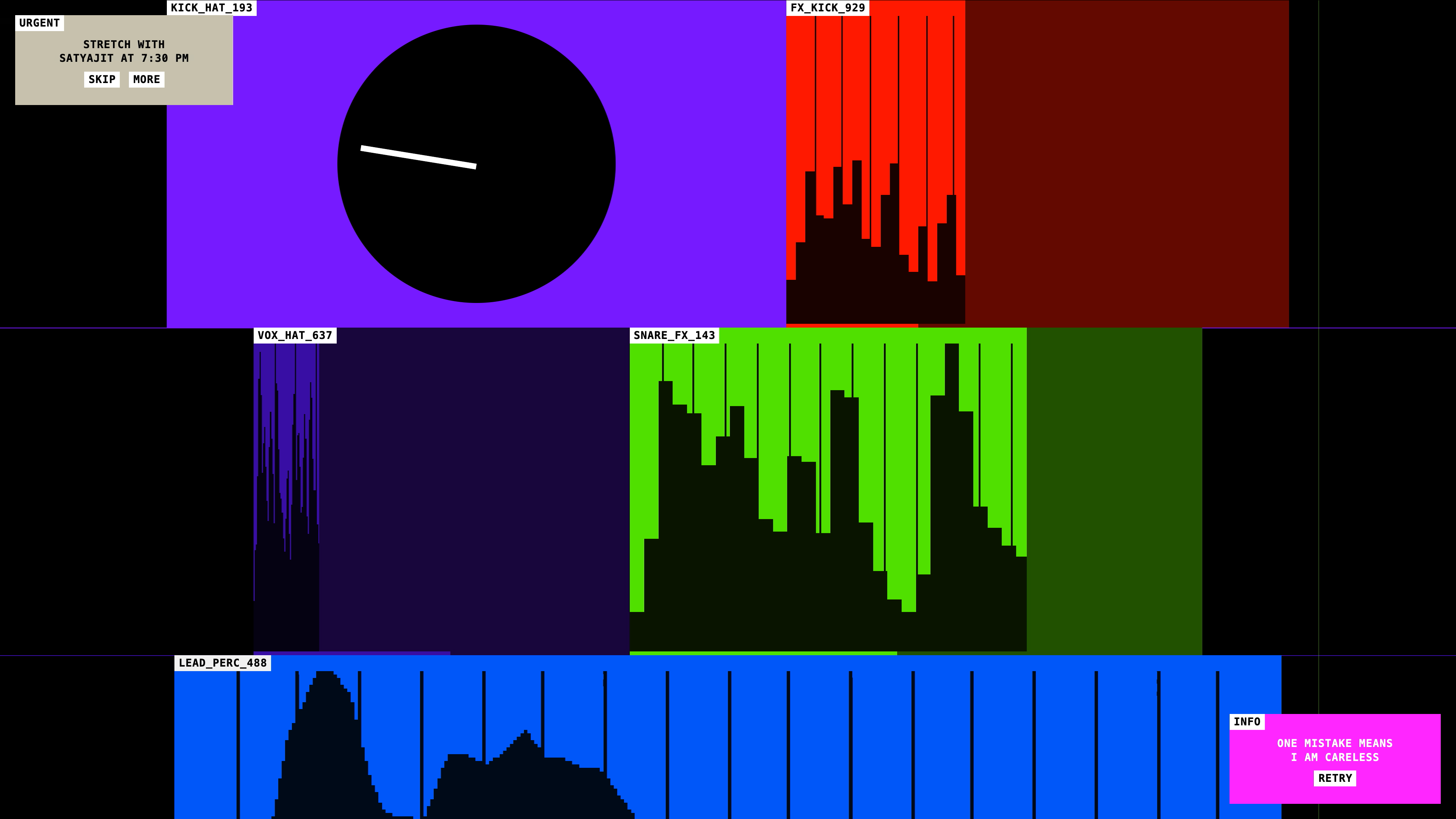
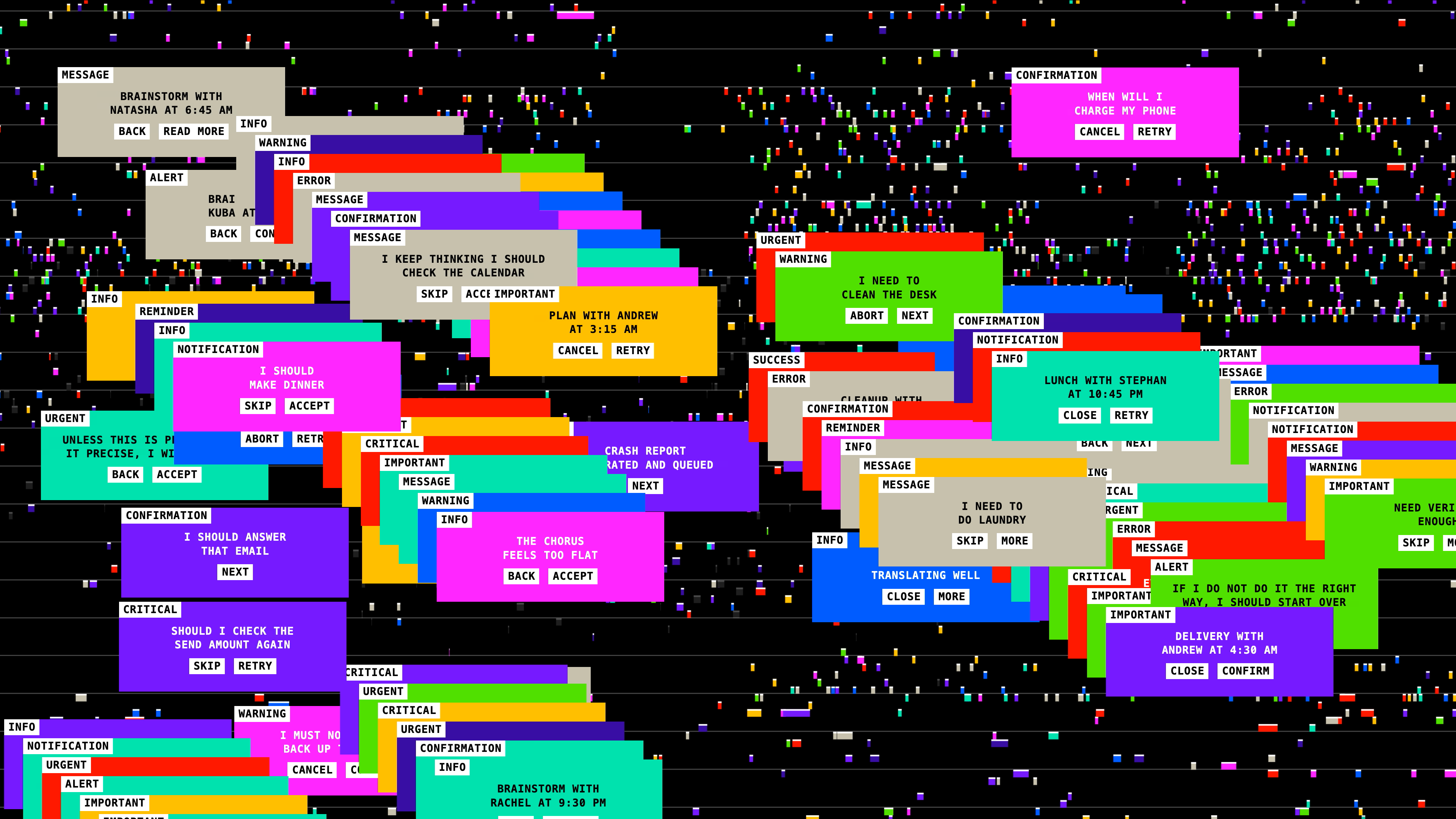
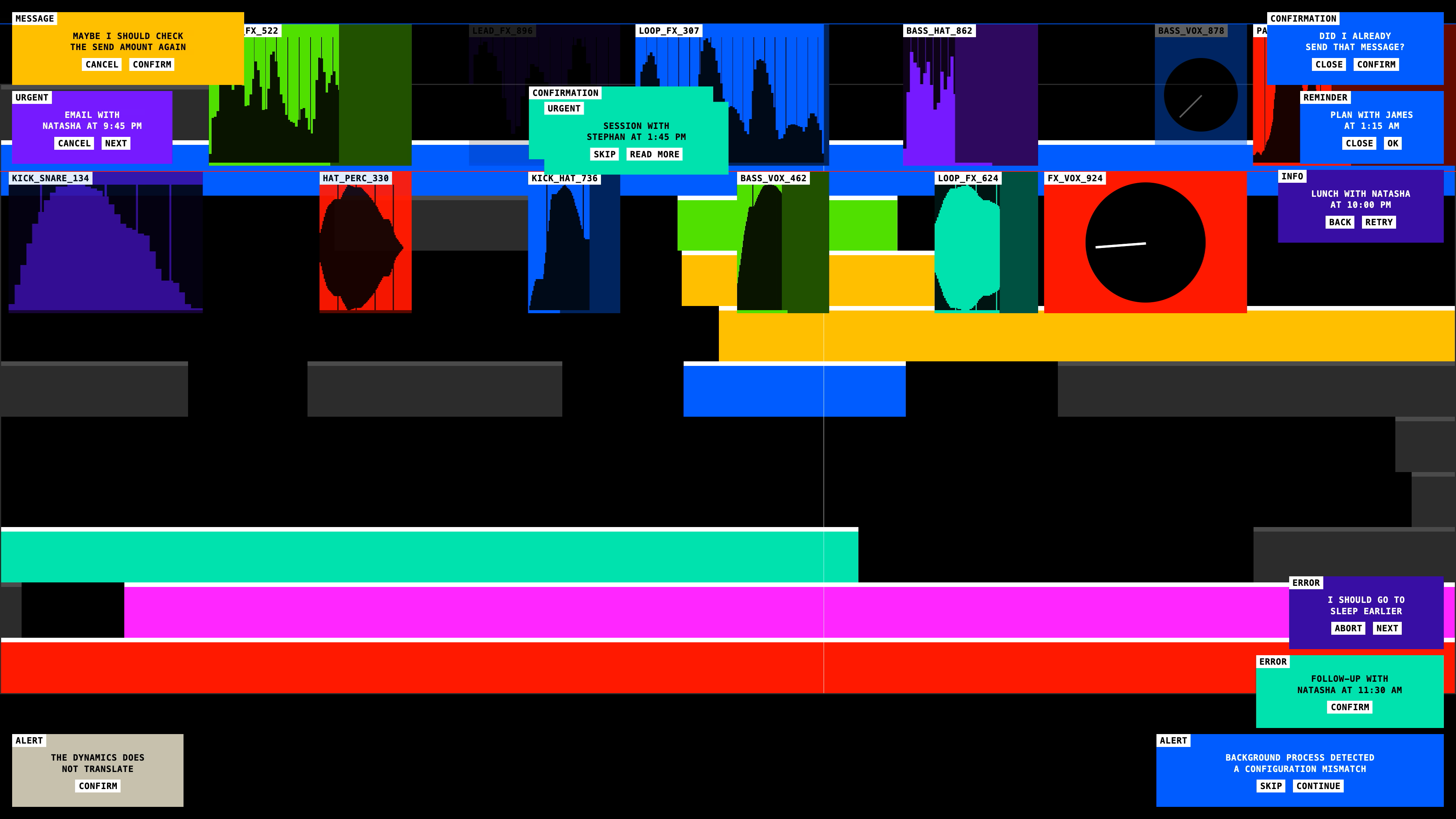
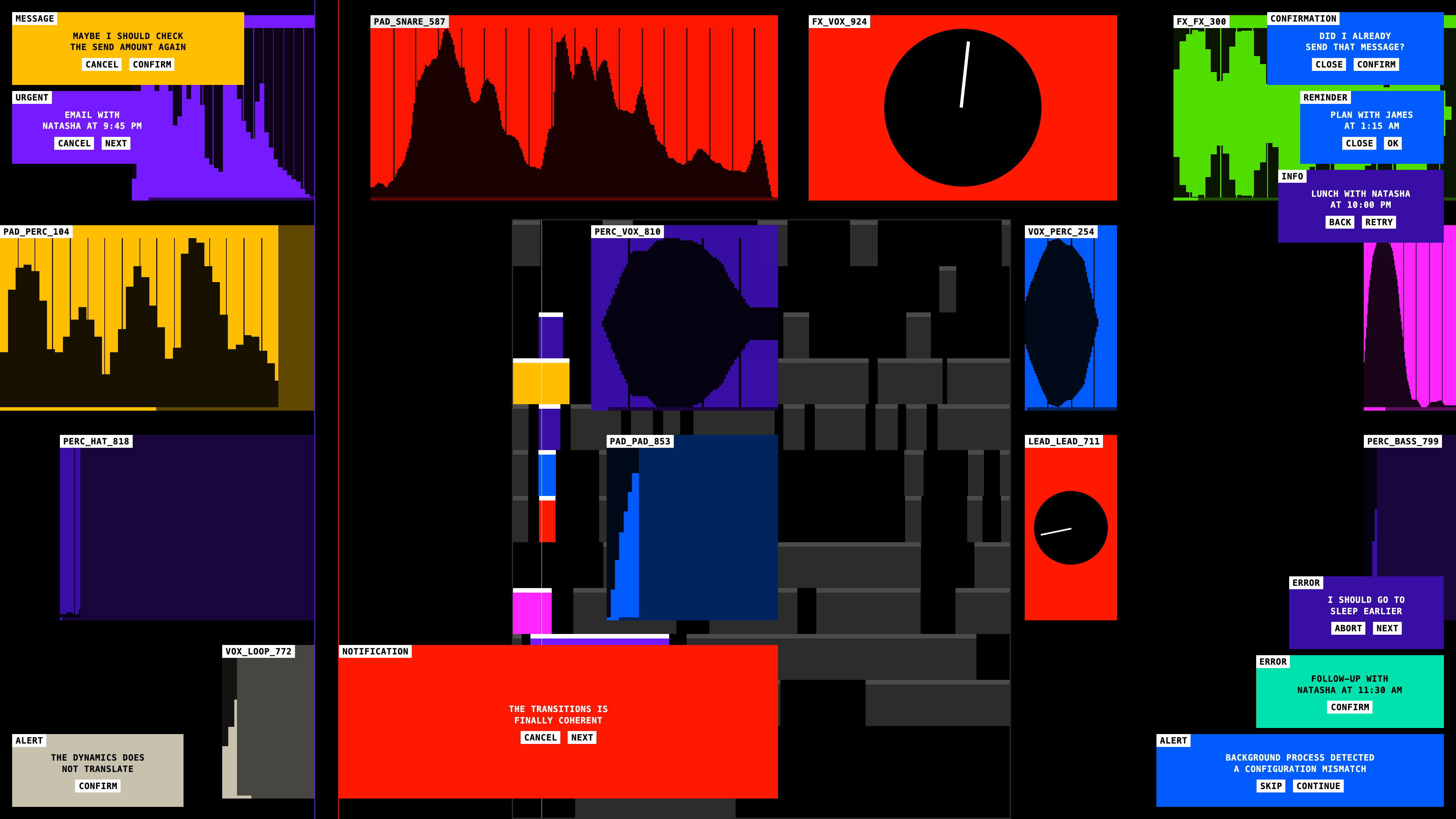
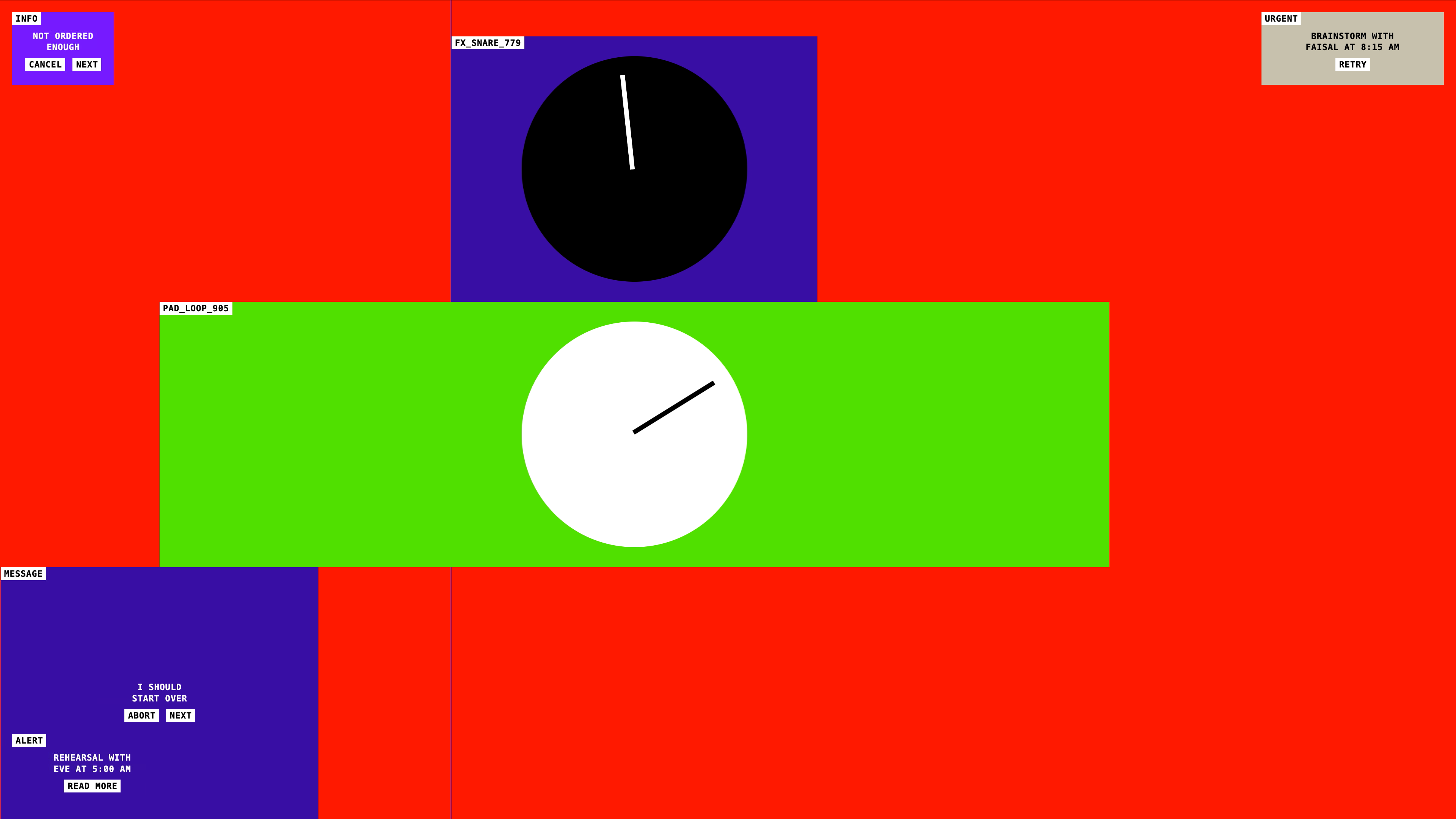
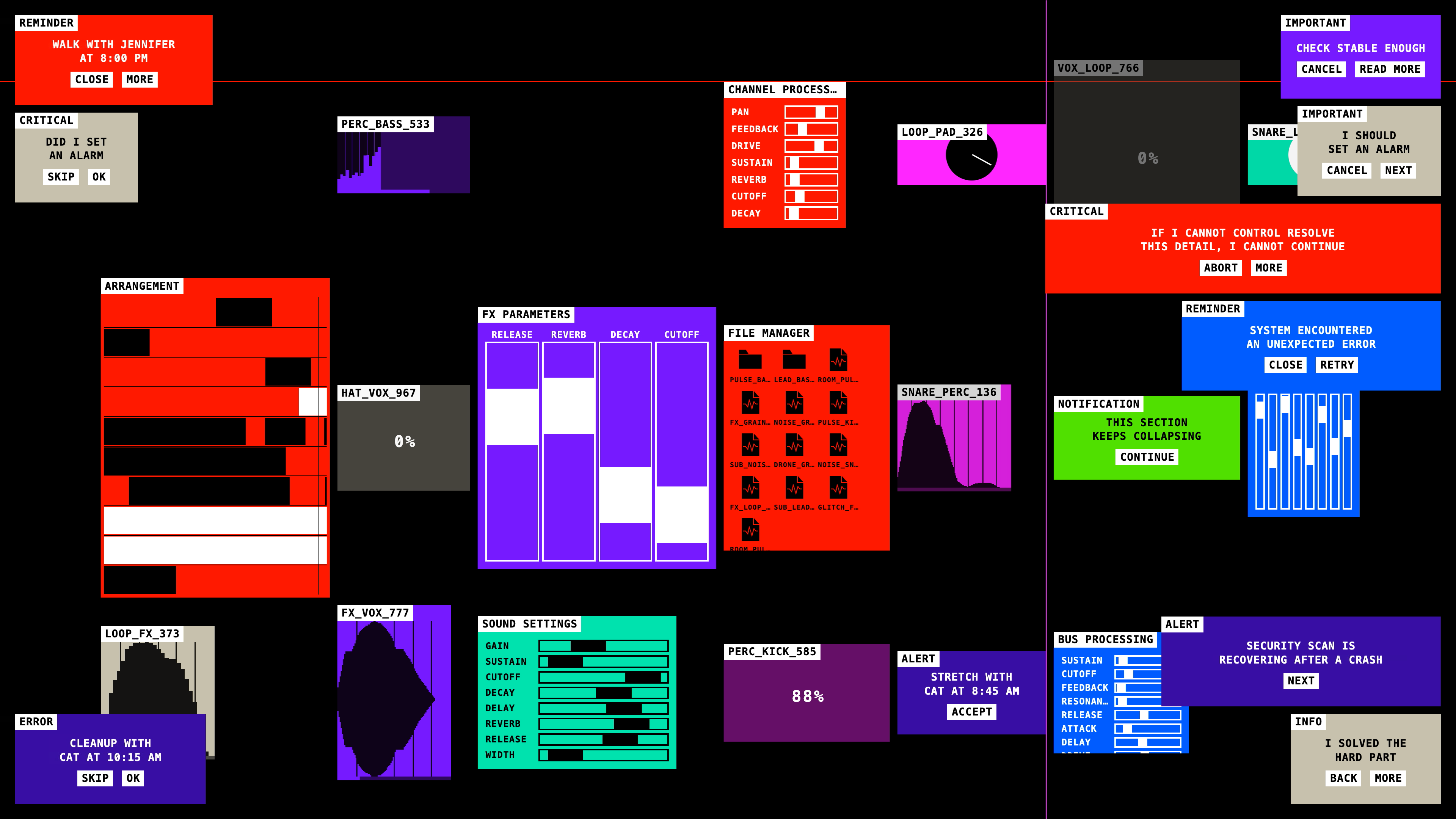
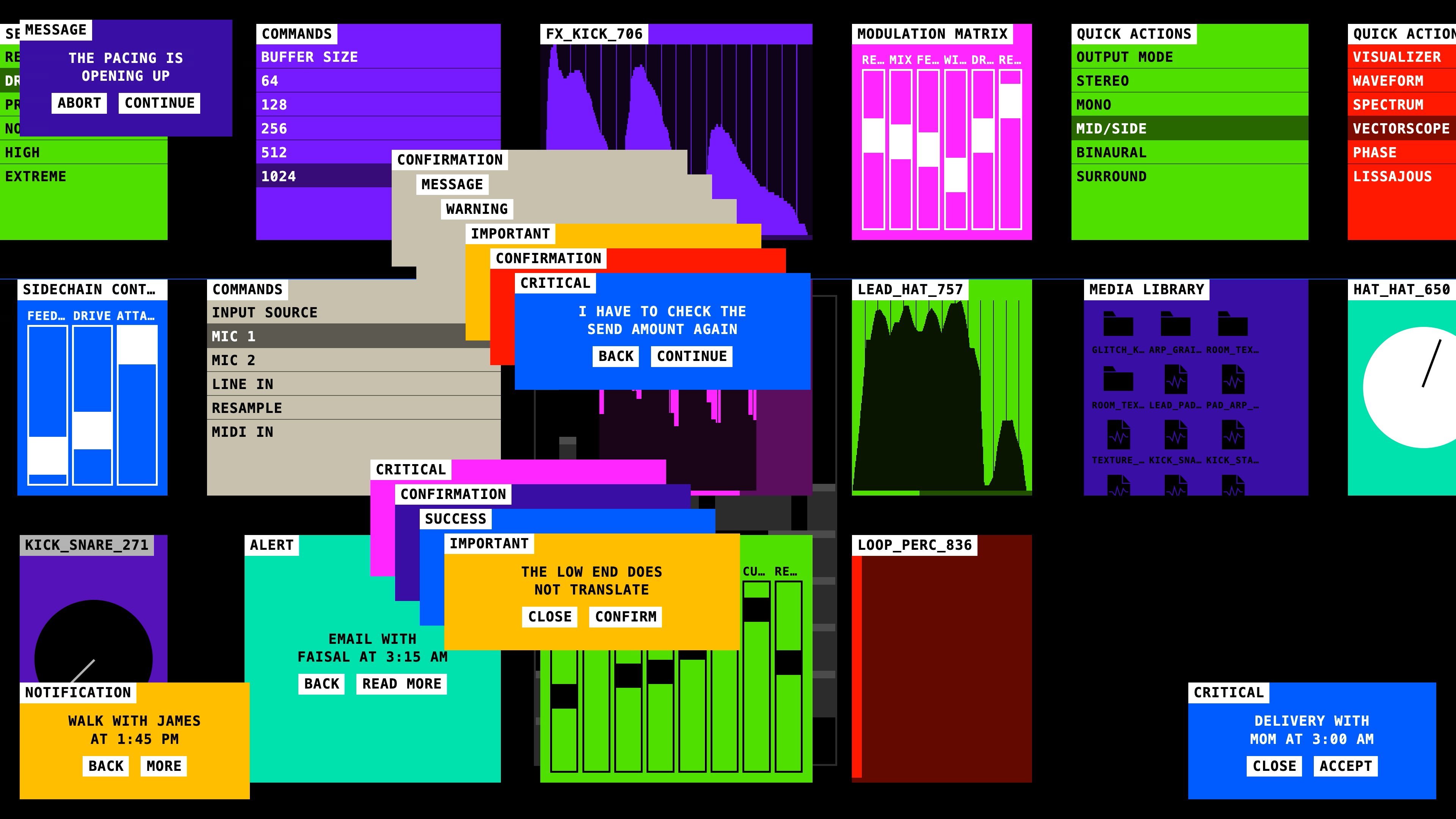
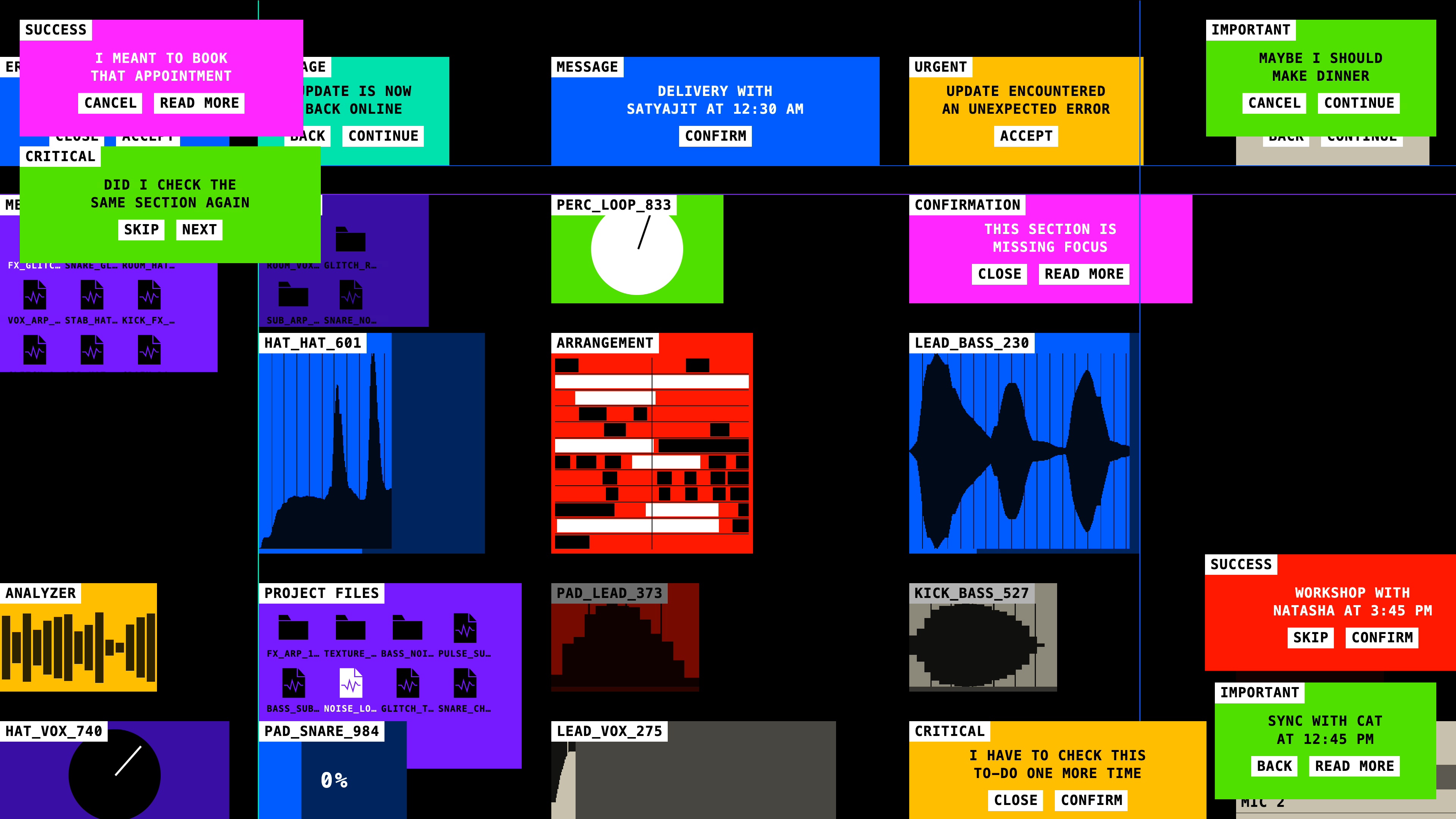
Another important part of working on a project is keeping focus, which also connects to the idea of OCD in the title. When you work on a computer, there are many distractions (notifications, messages, alerts, errors), all interrupting your attention and creating pressure to organize, respond, and fix things. I wanted to include this in the video through typography, by flooding the screen with messages. Some relate to the system, others to the project, and there are also more personal thoughts, which are partly generative, built from fragments that combine into different sentences.
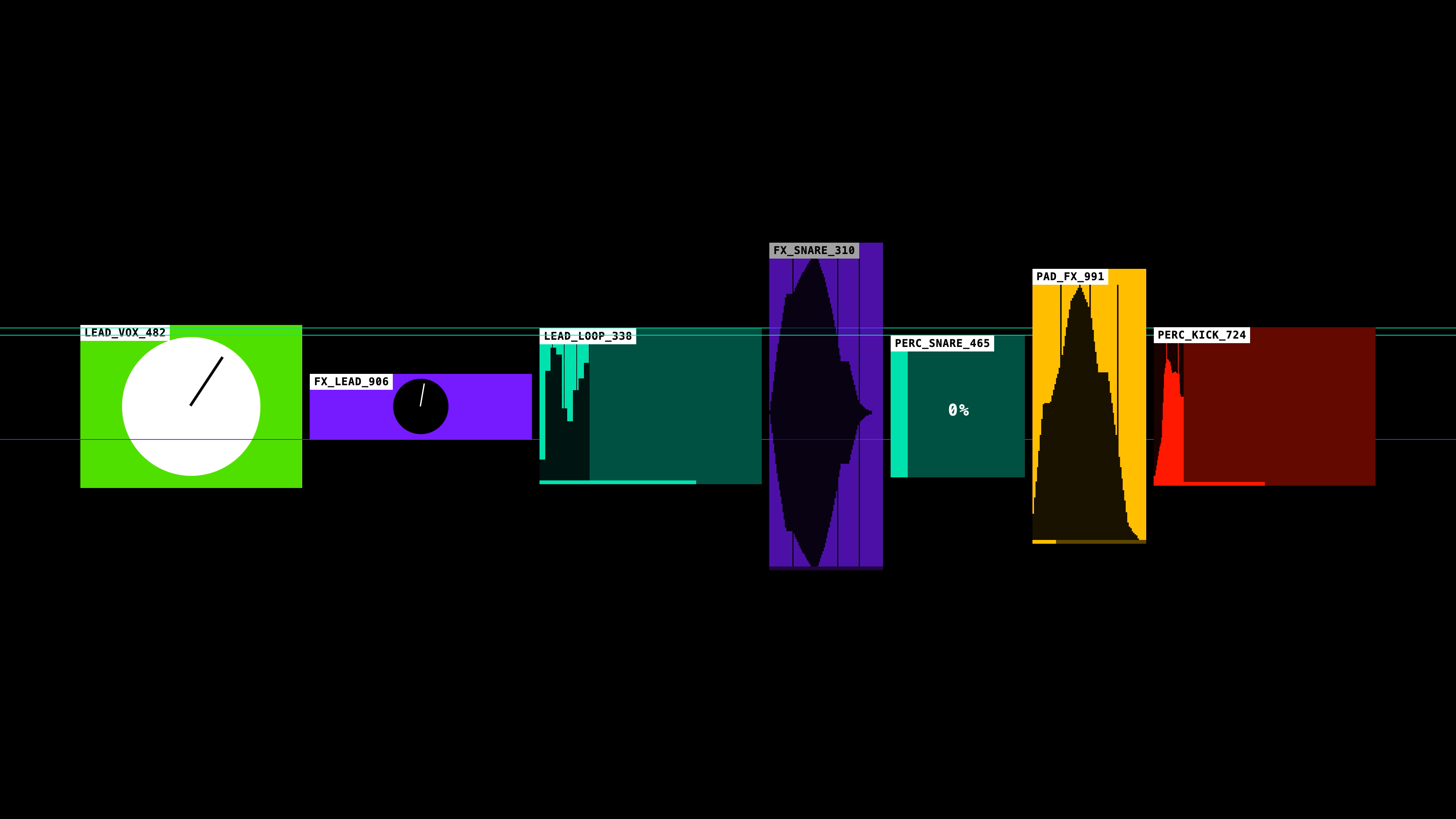
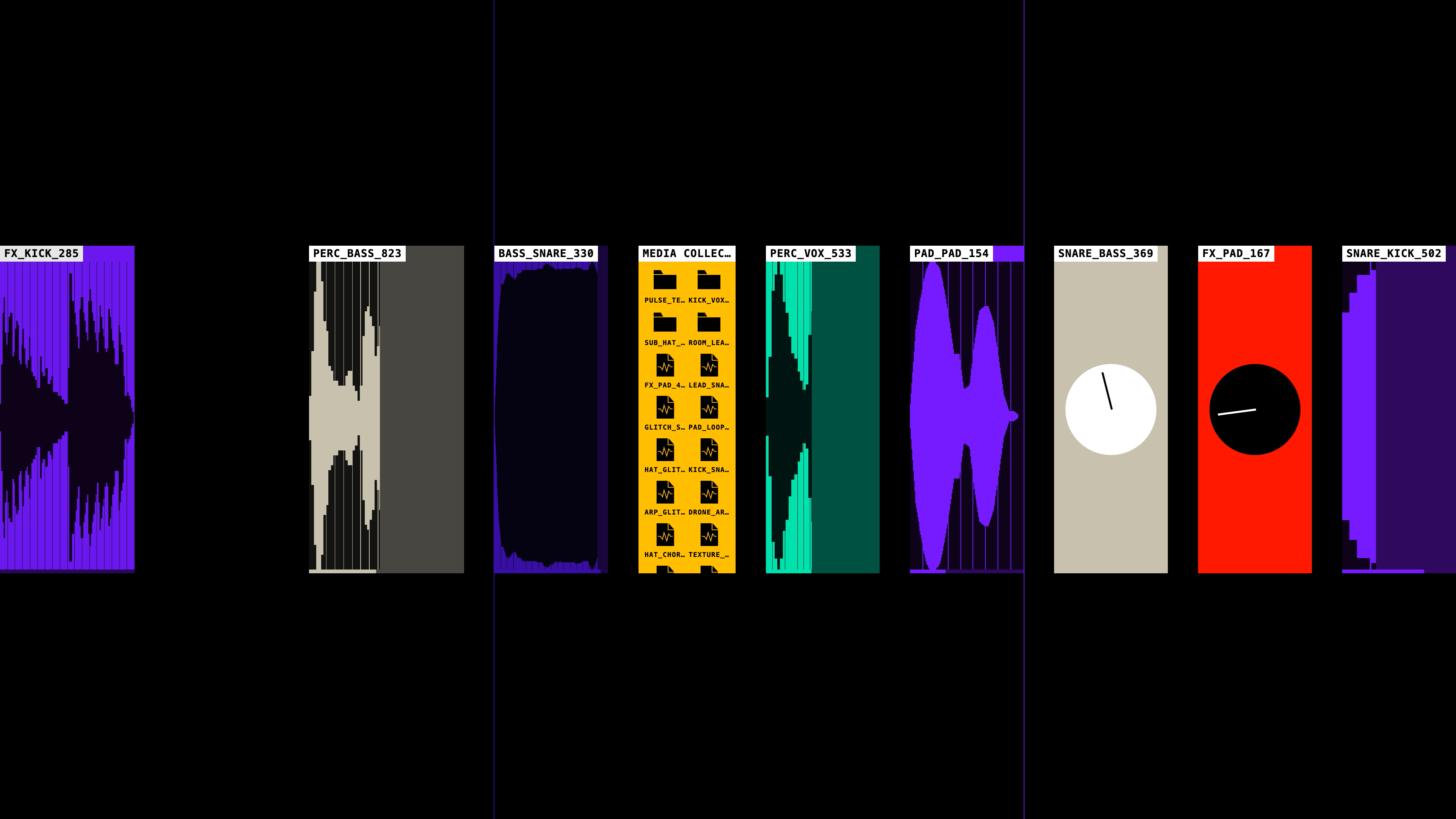
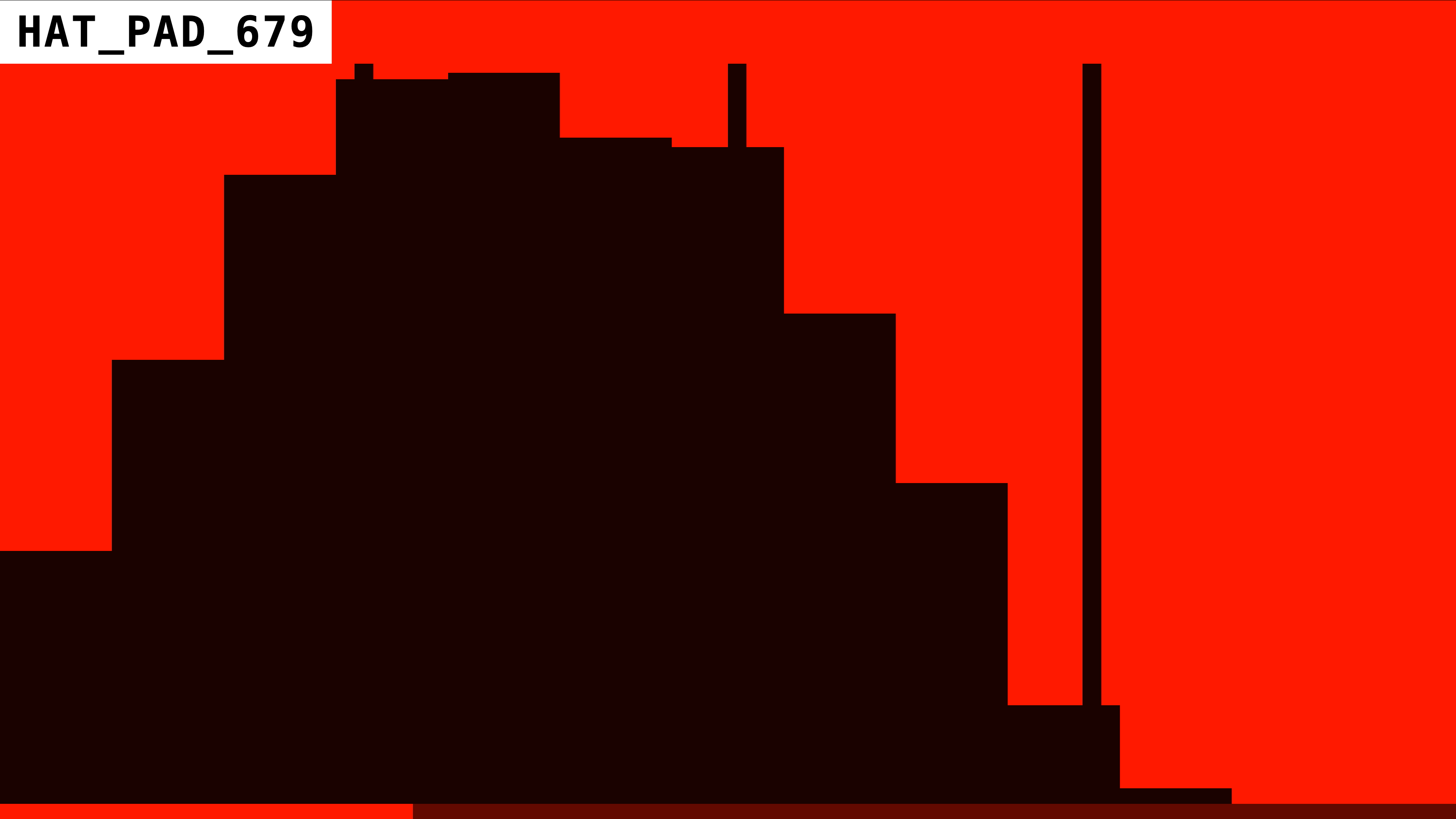
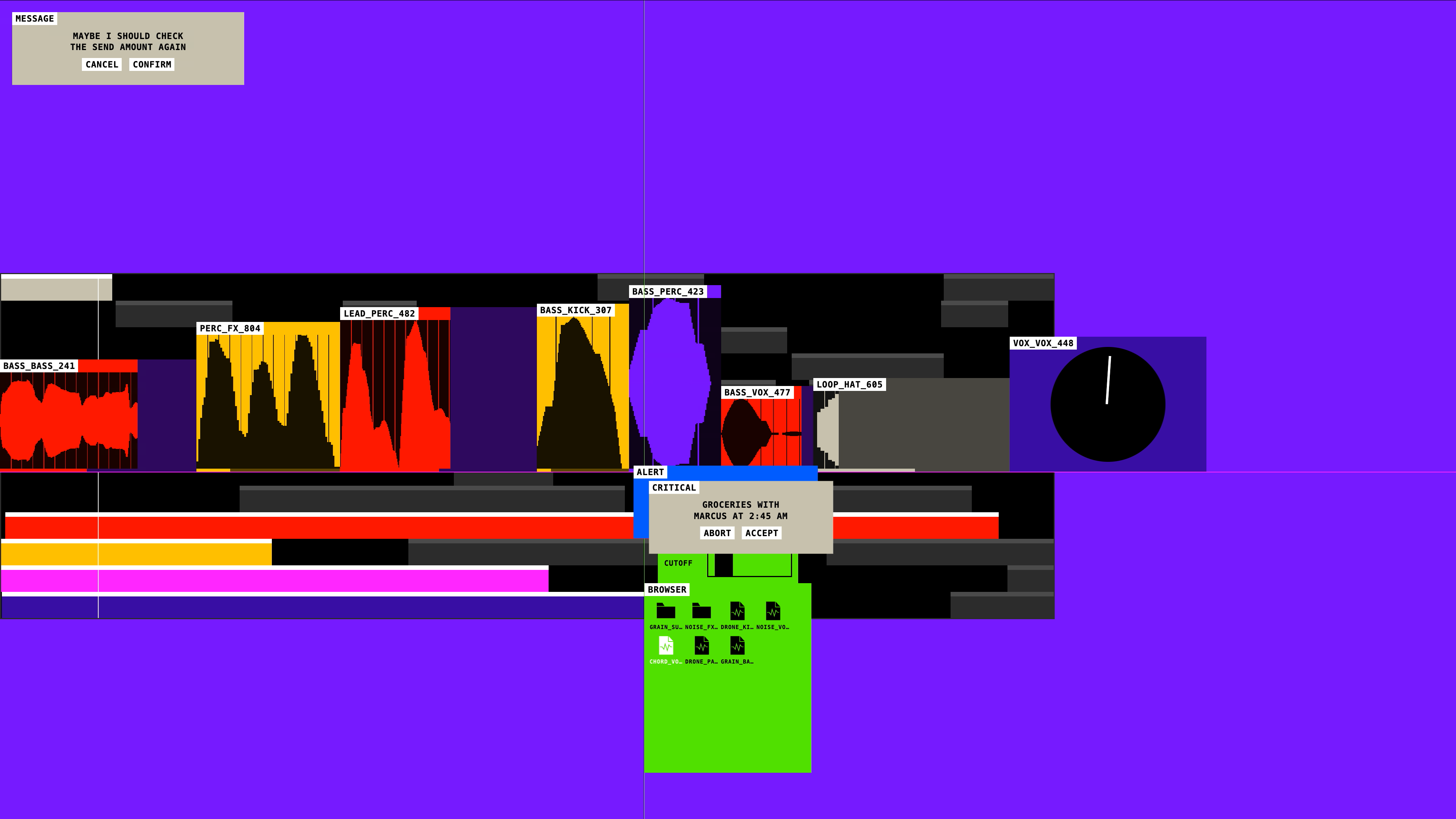
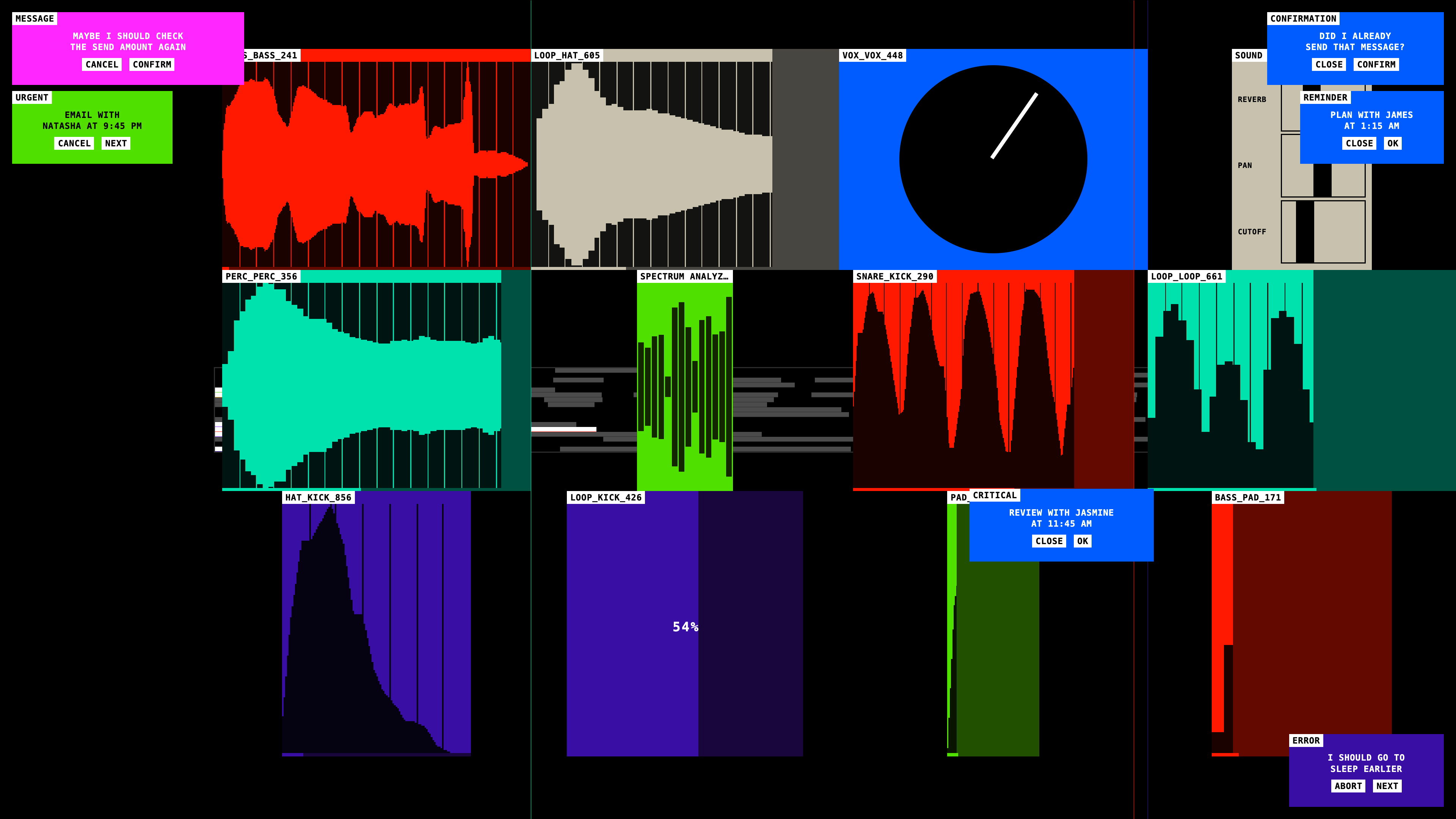
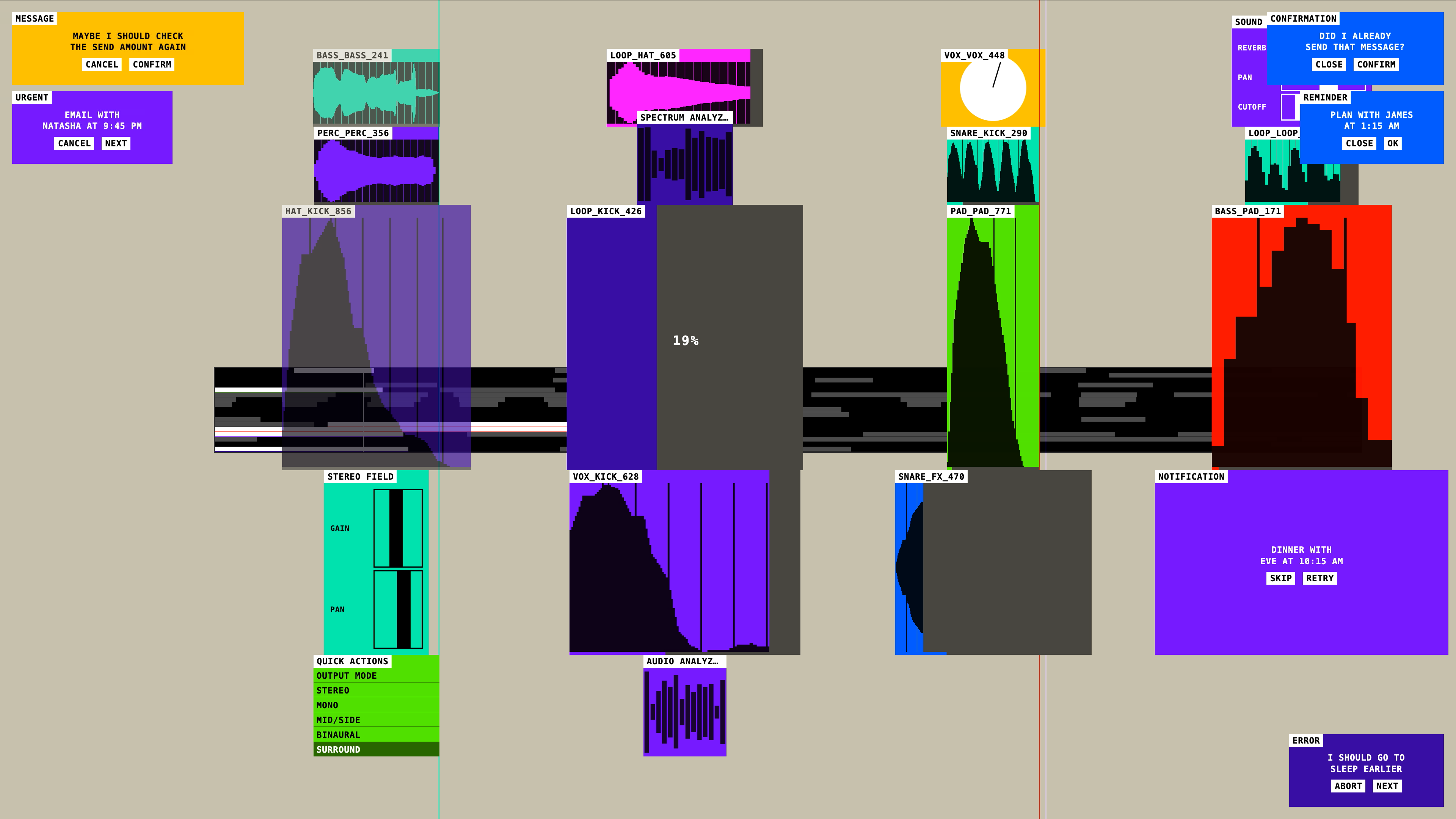
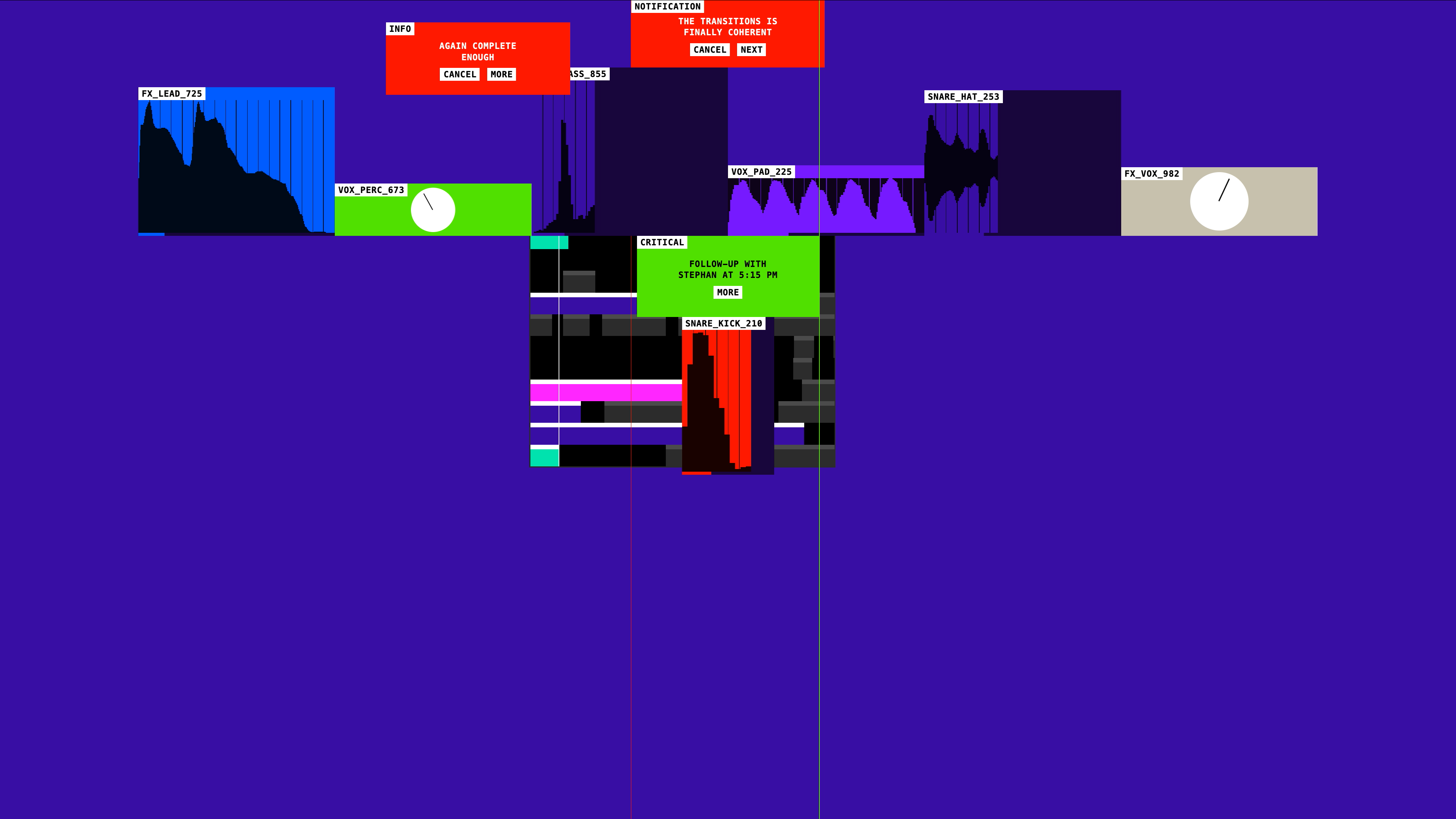
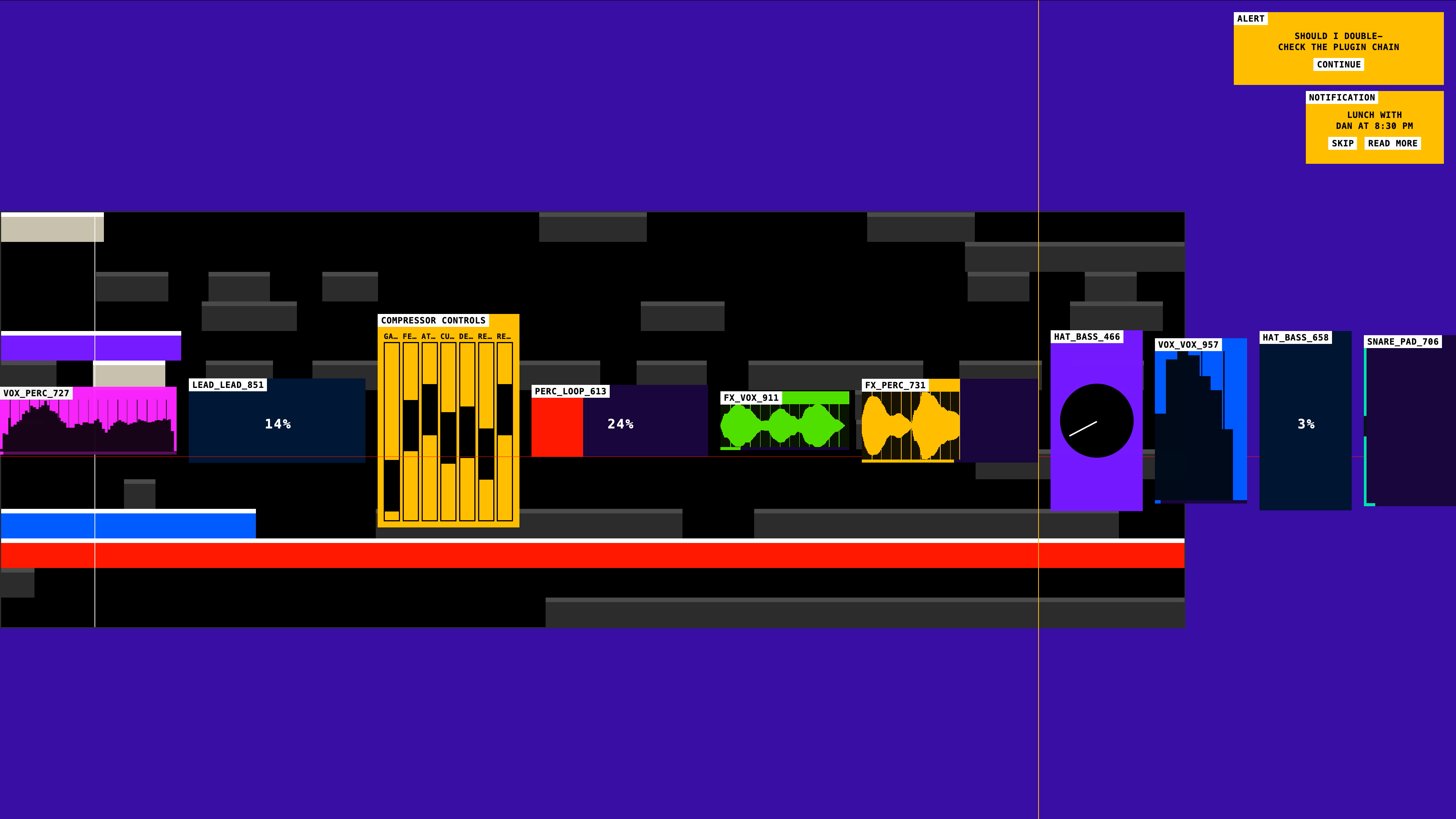
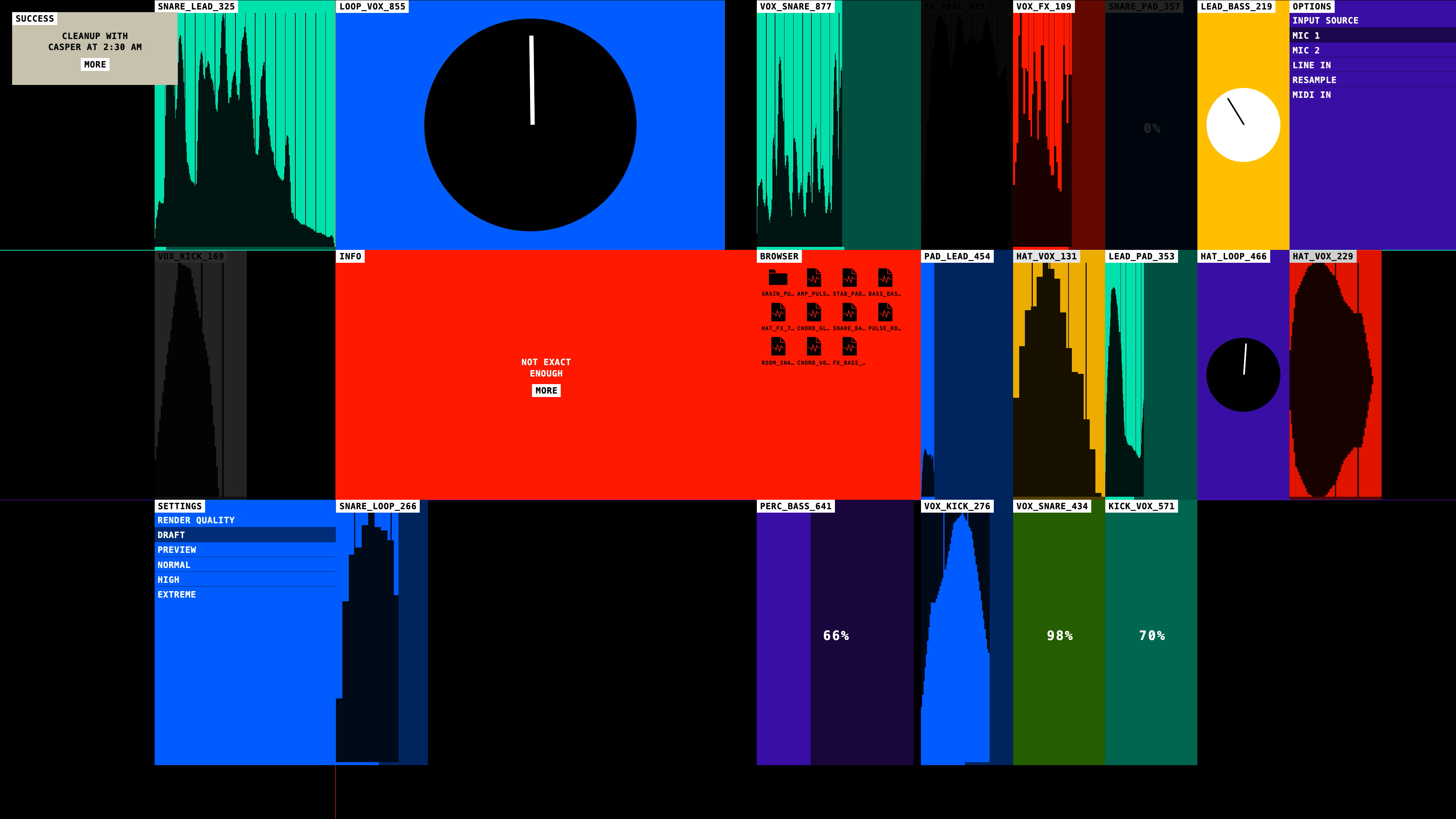
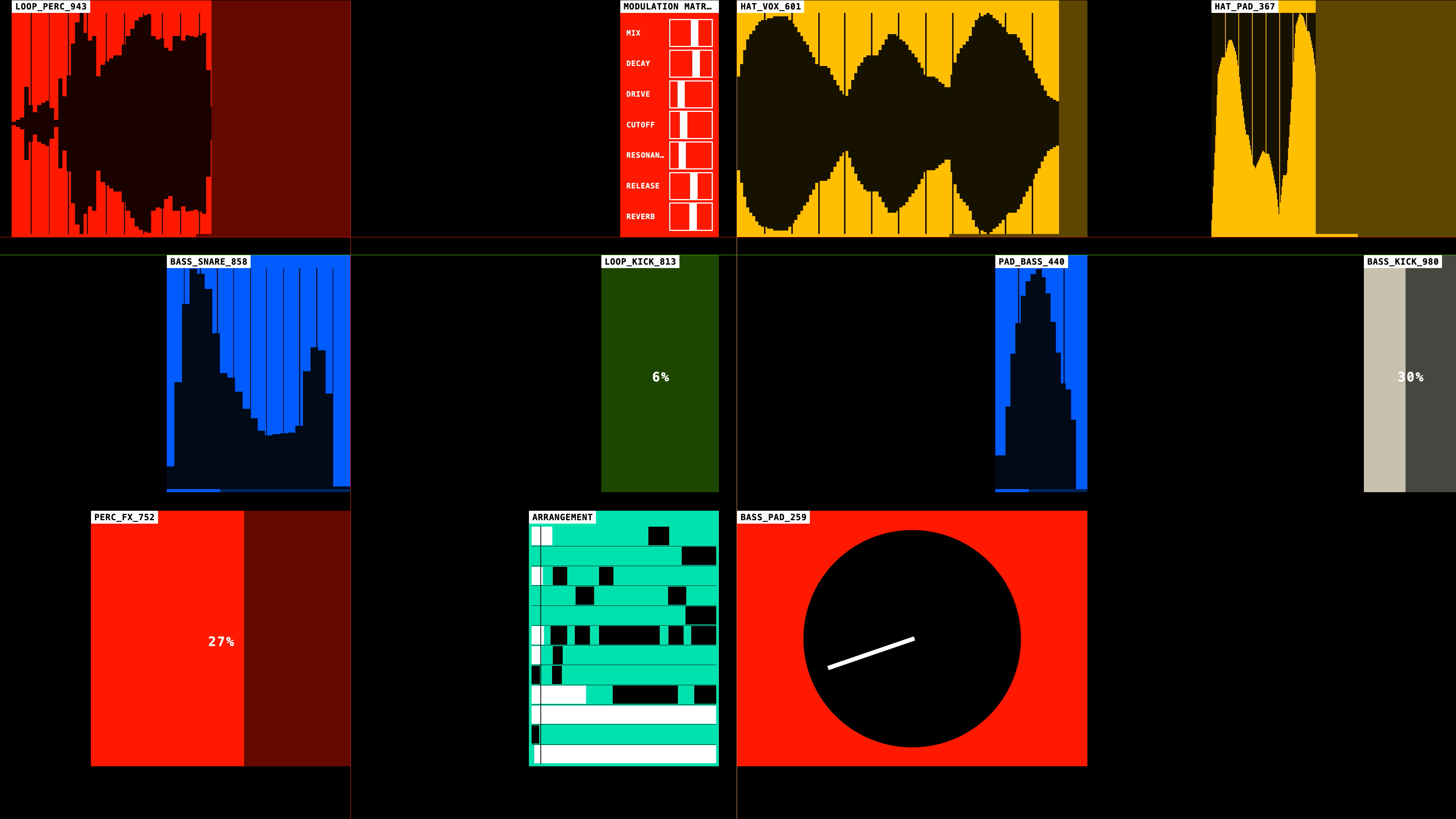
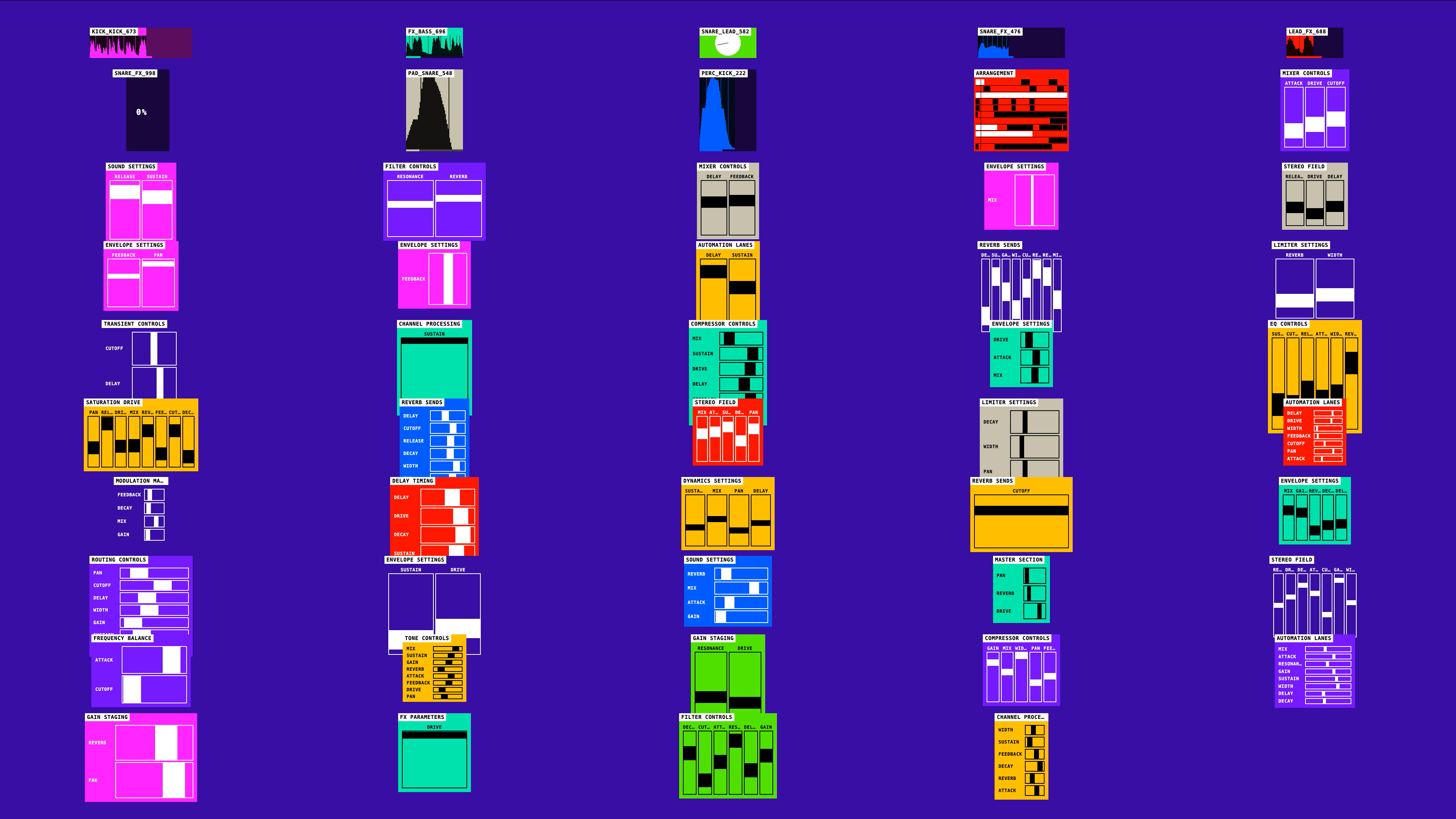
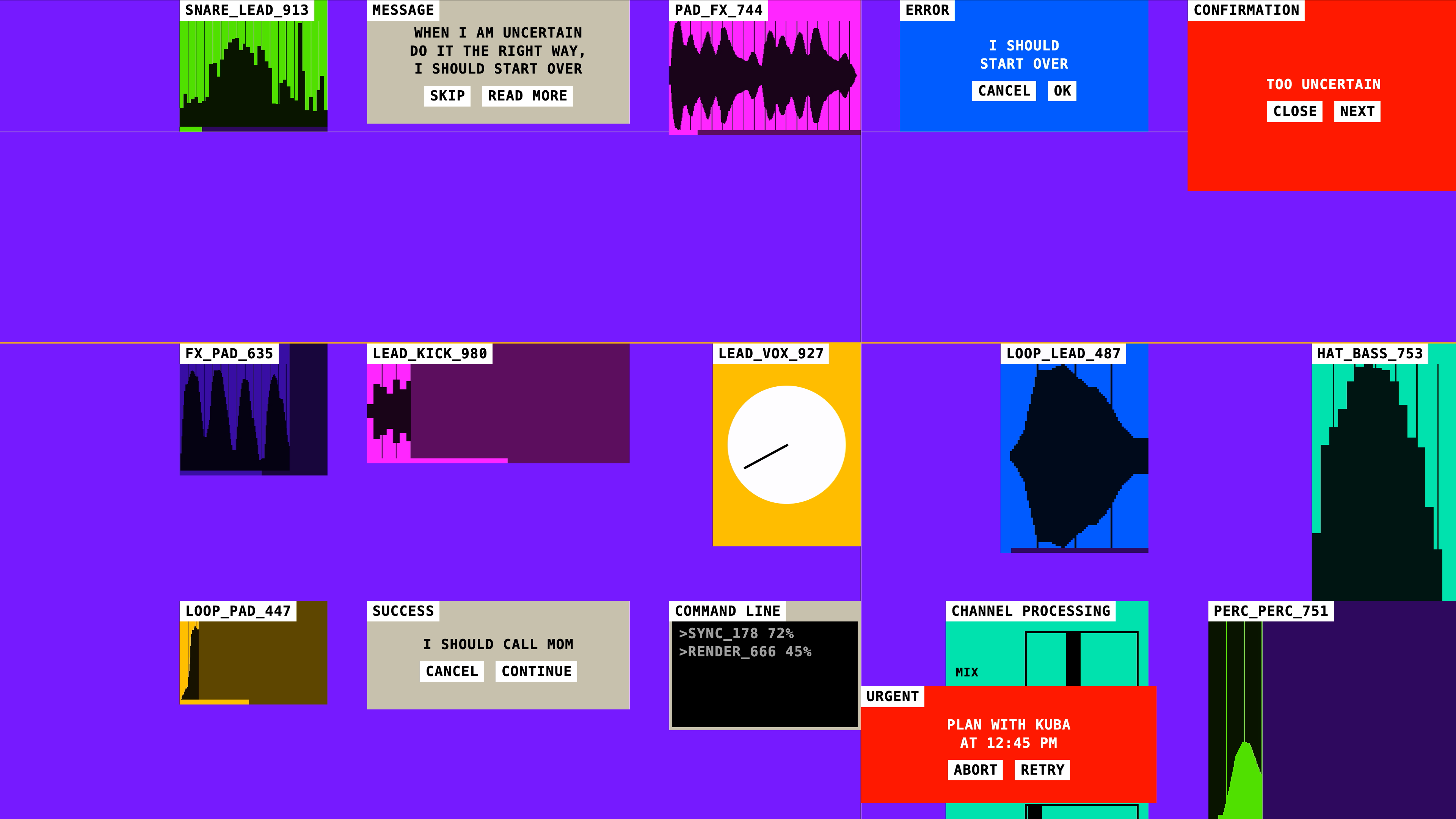
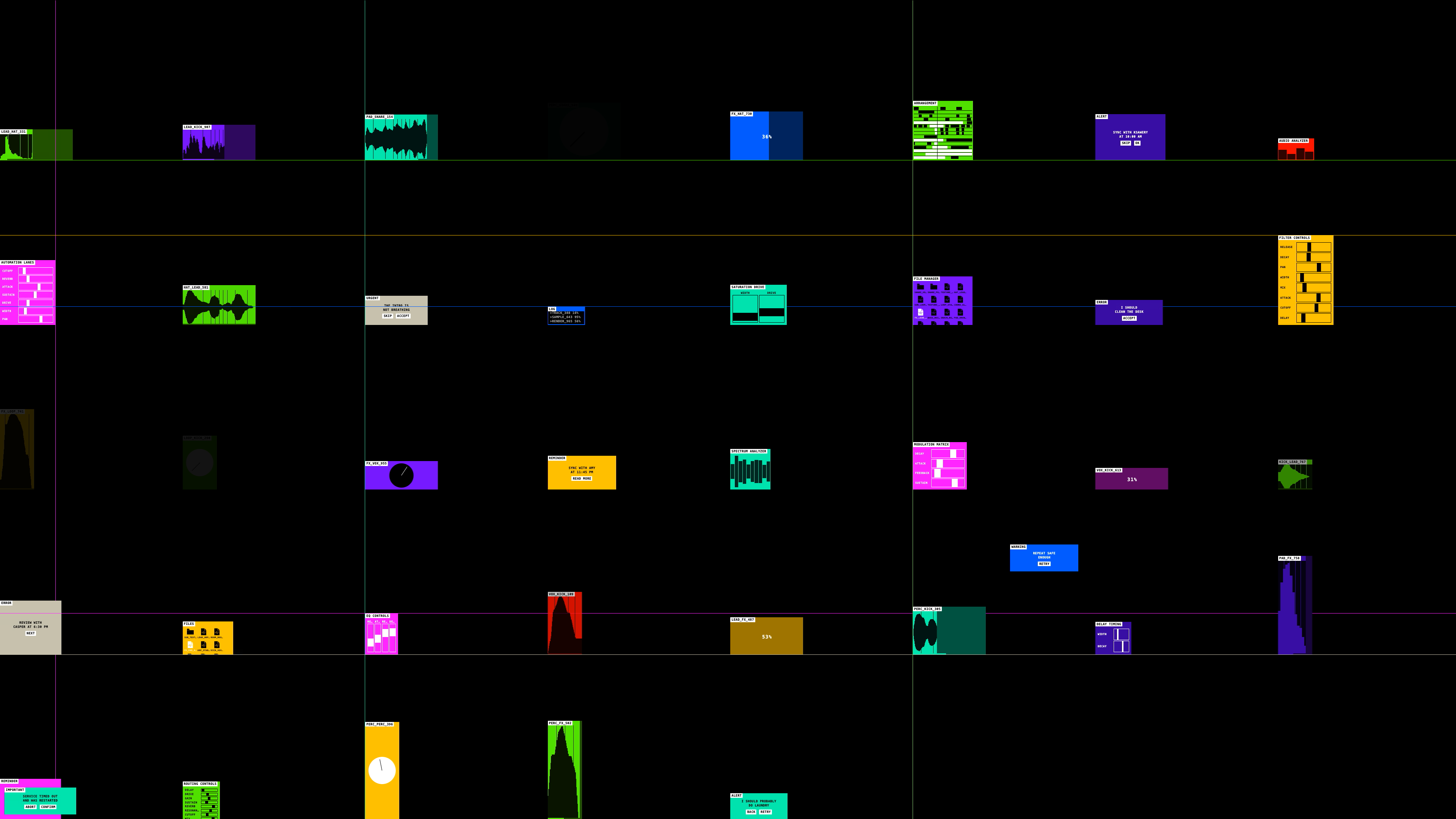
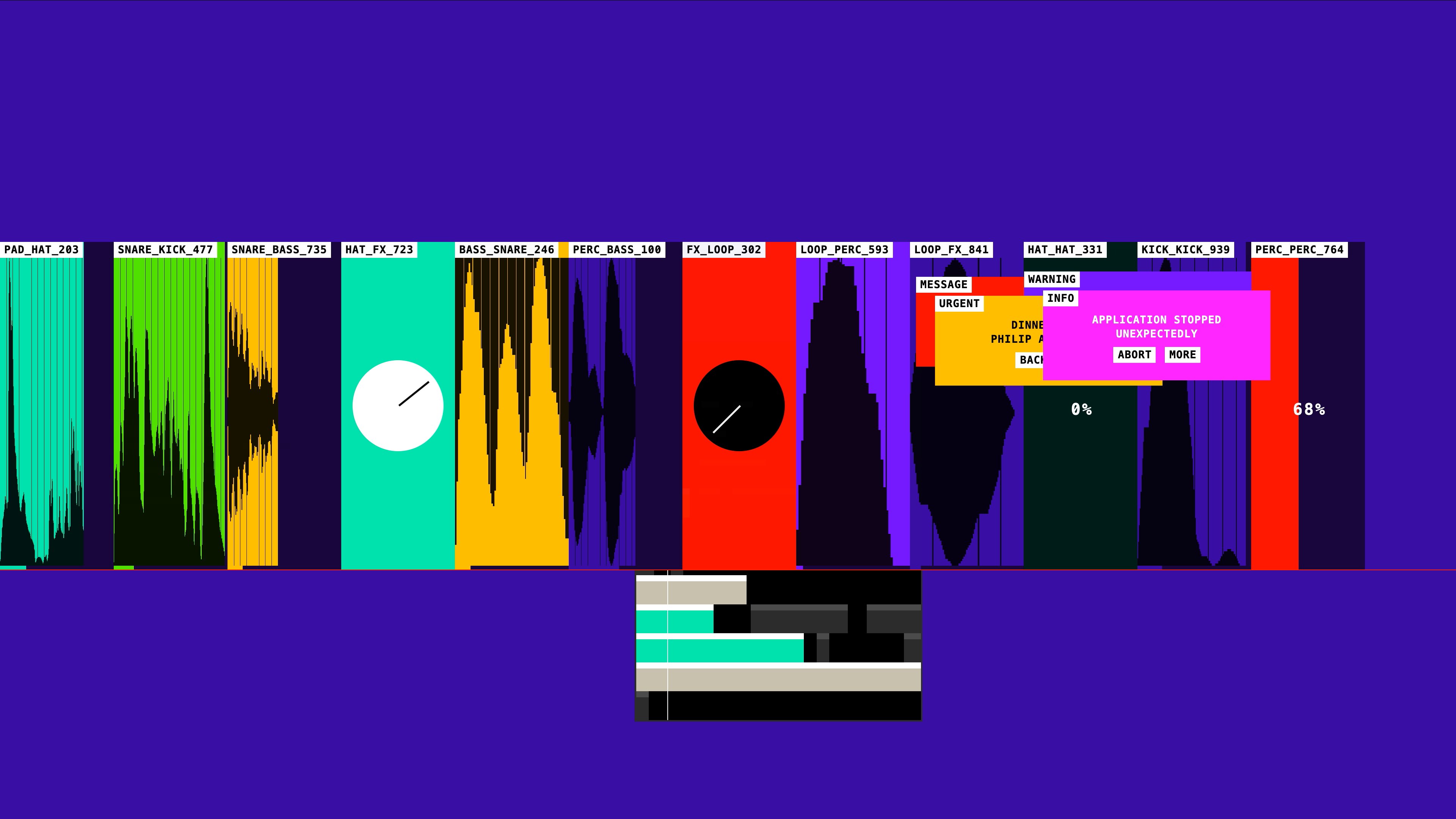
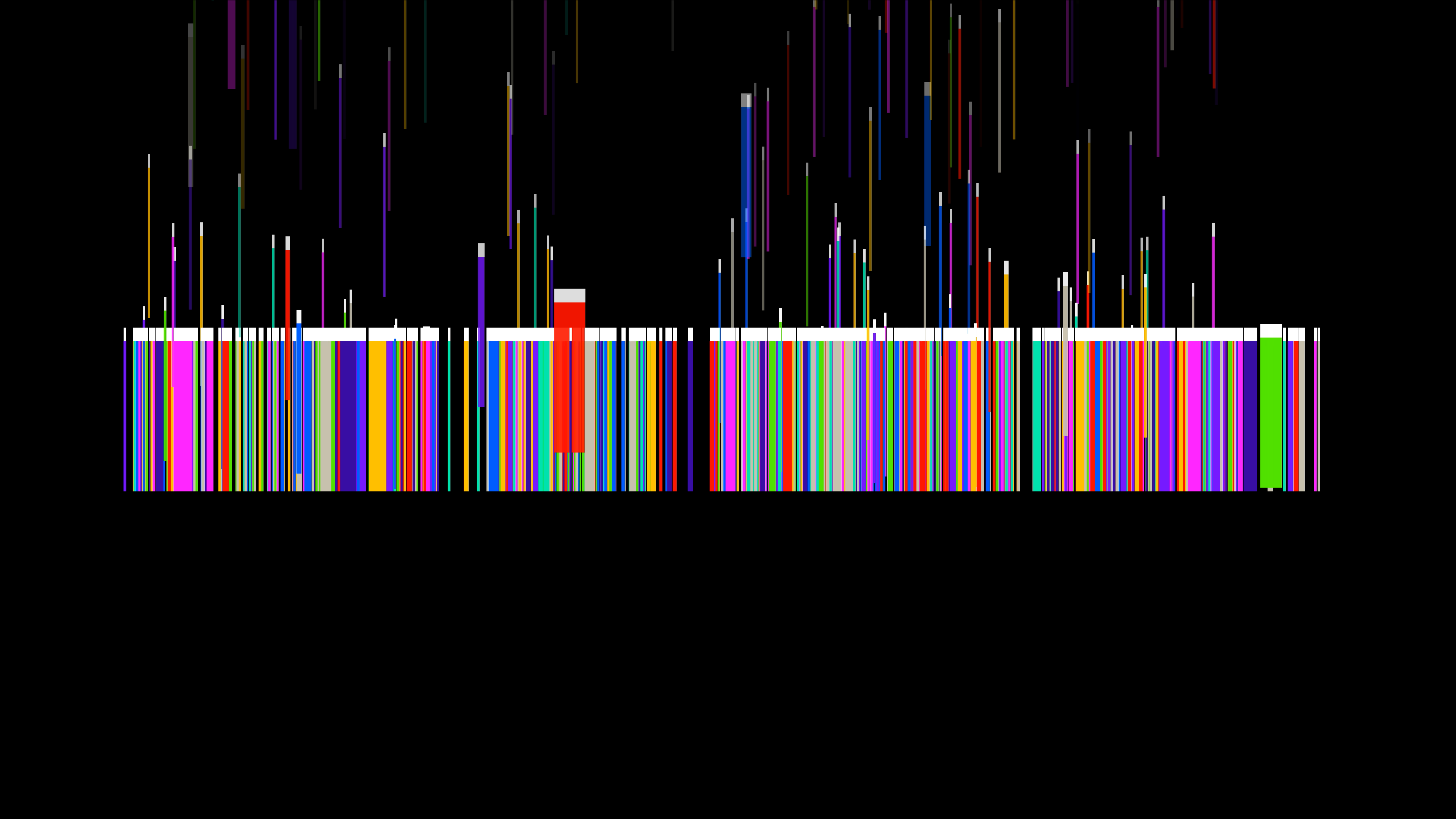
I started by listening to all the separate tracks Max provided and built a simple tool to store the sounds as short samples. This allowed me to analyze the track in detail – which sounds are playing, when they start, how they change over time, and when they end – creating a dataset that could drive the visuals. From this, I developed a system of small windows to represent the data, where each sample can appear in different visual forms, such as a waveform, a knob, or other interface elements. Some windows also include extra panels or controls, similar to what we use in software.
The overall compositions are partly random, but also follow strict rules about how and when elements appear, slowly becoming more structured and forming a whole. A big part of my work was deciding what should be random and how much, which is what these rules define. As a result, the system is generative – each time you play it, it looks different, while still following the same structure.